Cable news firebrand Rachel Maddow appeared on Jimmy Kimmel Live last week. I’ll spare you the sordid details, but in short Maddow reasserted her long-held delusion — which is shared by many of her proselytizing colleagues — that the current president is evil incarnate, that he is essentially responsible for the imminent collapse of society, and of course he is still working in cahoots with Vladimir Putin.
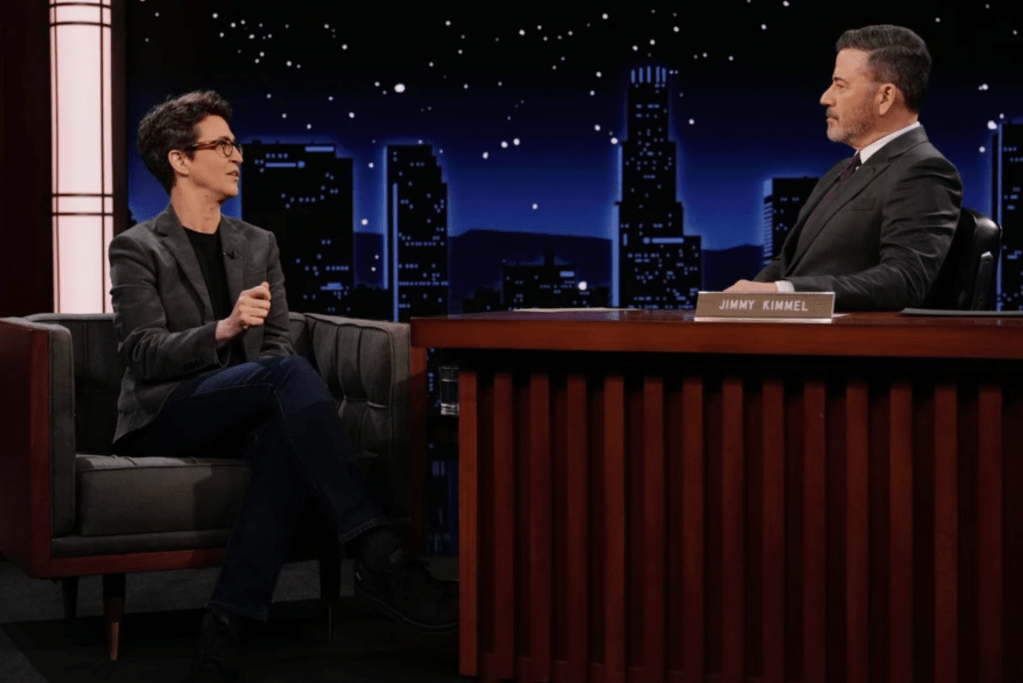
Ironically the in-and-outs of the ambitious masterplan reportedly concocted by Putin and Trump to conquer America remains a well-guarded secret; in fact you could say that validated details have been damn near impossible to come by. Go figure.
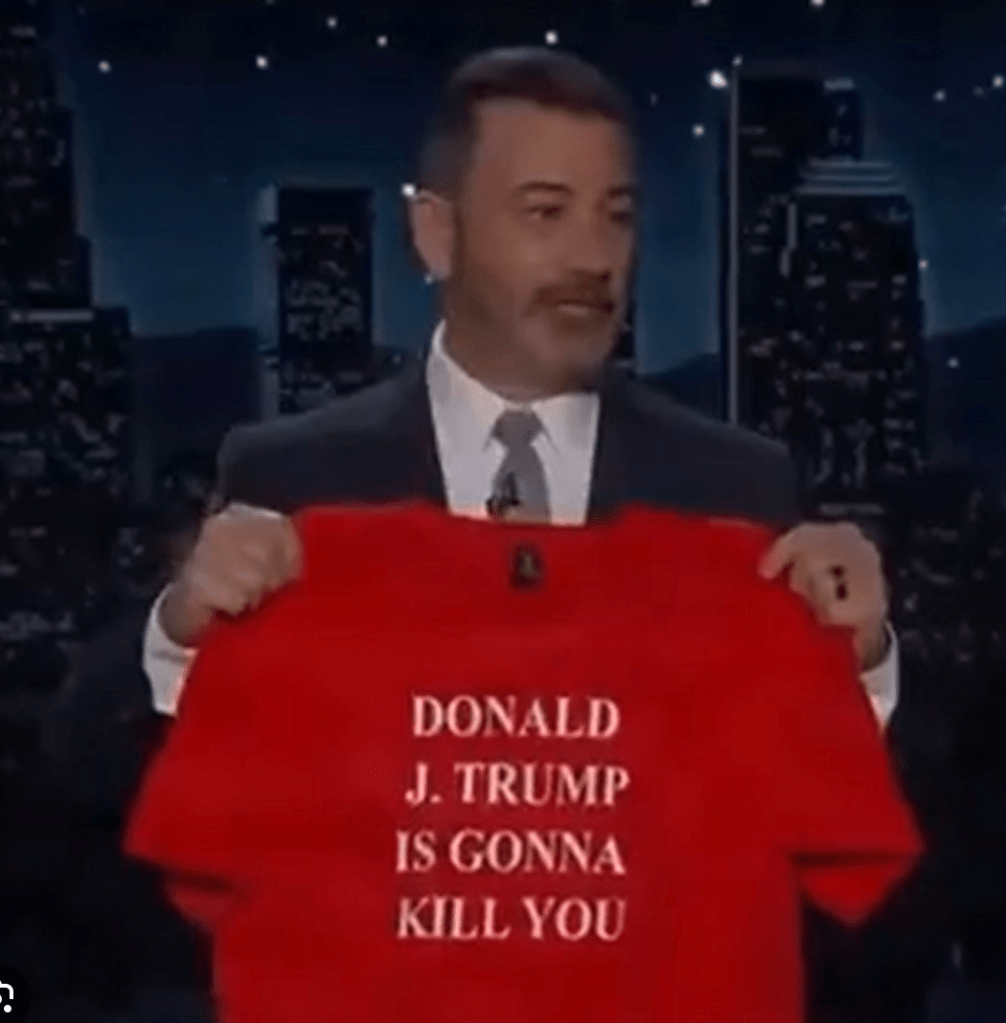
Maddow’s debunked agitprop was preceded by Kimmel (flashing his usual shit-eating grin) holding up a shirt during his monologue with “Donald J. Trump Is Gonna Kill You” emblazoned across the front — a conspicuous reference to the Renee Good shooting in Minneapolis on January 7.
Rachel Morin, Laken Riley and Dacara Thompson (whose assailant was merely referred to by ABC News as “Maryland man”) deserved better than their fate; fascinating how so little was done to commemorate them.
God help me, they’re unrepentantly shameless. And this got me to thinking…
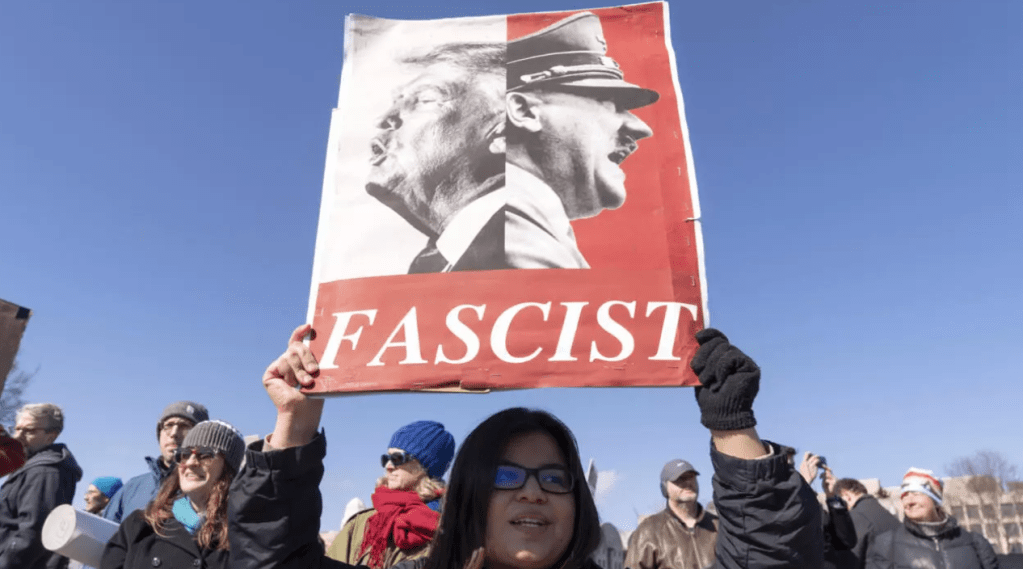
It seems constant accusations from left-leaning media have labeled Donald Trump a dictator since his re-election. Such claims typically focus on his rhetoric, executive actions, and perceived erosion of democratic norms through authoritarian power grabs.
Other smears include comparisons to fascism, with one poll showing 49% of registered voters viewing Trump as a “political extremist who seeks to act as a dictator.” Revoking security clearances for critics like former Joint Chiefs Chairman Mark Milley also added fuel to the fire.
These portrayals emphasize a slide toward totalitarianism, with Trump seen as consolidating power, threatening opponents, and using the military in ways reminiscent of historical dictators. In contrast, however, his actual governance has demonstrated a mix of aggressive policy implementation through legal channels rather than outright overreach.
Trump issued 225 executive orders last year, covering areas such as deregulatory agendas, AI policy frameworks, designating fentanyl as a weapon of mass destruction, increasing medical marijuana research, withdrawing from international organizations deemed contrary to U.S. interests, and ending diversity, equity, and inclusion (DEI) programs across federal agencies.
Other moves include renaming the Department of Defense to the Department of War as a symbolic gesture, streamlining regulatory processes, and targeting independent agencies for greater White House oversight — actions critics decry as power grabs but which operate within executive authority precedents set by prior administrations.
While these reflect a strong executive style, they align more with populist conservatism (e.g., anti-internationalist, pro-deregulation) than with suspending elections, jailing rivals without due process, or declaring martial law — hallmarks of true dictatorships.
The Trump administration has also pursued bipartisan-friendly policies, like expanding cannabidiol research, which would seem to undercut narratives of pure authoritarianism. Yet the difference lies in intent: smears frame these moves as steps toward fascism, while the actions themselves often build on existing powers, though implemented with unusual speed and scope.
Using emergency powers for tariffs or immigration enforcement led to supposed fears of unchecked authority. However, no evidence from 2025 shows Trump terminating the Constitution or establishing a permanent dictatorship, as some pre-election warnings suggested.
The hypocrisy of left-wing accusations against Trump stems from a partisan double standard: critics decry his actions as authoritarian while overlooking or even defending similar behaviors from Democratic leaders who are just as willing to support executive overreach when their party holds power, such as bypassing Congress on military threats, revealing a partisan speciousness — if not outright phoniness — where abuses are tolerated if aligned with one’s side.
Legal experts like John Yoo, Robert Delahunty and even Alan Dershowitz note the irony in Trump critics labeling his moves as “autocratic” while ignoring precedents like Democratic expansions of executive power or false claims in court (see Letitia James, Alvin Bragg, Fani Willis and Jack Smith) — mirroring behaviors perpetually attributed to Trump.
Naturally the criticisms extend to policy. Democrats accuse Trump of authoritarianism, ad nauseam, for deploying federal forces to cities, yet some supported similar tactics under Democratic governance or ignored them when aimed at conservative causes.
At its core, the persistent accusations from so-called progressives against Trump arise from differing philosophical views of human nature, history, and governance. Progressives generally believe that humanity is perfectible, history progresses toward utopia through reason and reform, and moral grievances must be eradicated immediately, often via centralized action.
When conservatives resist rapid change — owing to a worldview filtered through a lens of human imperfection and the value of time-tested institutions — progressives interpret it as obstructionism or regression, which fuels charges of authoritarianism. This is the root of practically everything they say and do, and psychological research confirms it (yes I own this book).
Progressives do not understand conservative moral foundations (e.g., loyalty, authority, etc.), leading to perpetual misattributions of racism and fascism. This moral divide breeds hostility, with leftists seeing conservative restraint as an exhibition of indifference, if not callousness, to injustice.
Disputes about human infallibility — rooted in the left’s social engineering hubris — ultimately evolve into political ideologies where progressives prioritize abstract ideals over practical complexities, which leads to viewing opponents as threats to the welfare of society. And in Trump’s case, this manifests in persistent accusations that his governance betrays democratic norms, even when it consistently aligns with constitutional precedents.
Put simply, they’re not going to be reasoned with. If not for double standards, anti-Right zealots would have no standards at all — and they have demonstrated this both repeatedly and beyond any question.
“Fascist” © Jose Luis Magana, AP
 New Hickory