An Israeli billionaire and co-founder of cybersecurity firms like Check Point Software and Cato Networks recently raised more than a few eyebrows during an interview on CNBC.
In the discussion, which focused on AI-driven cyber threats and misinformation on social media, Shlomo Kramer argued that the U.S. government should impose restrictions on free speech to combat what he sees as escalating dangers in the digital age.
Specifically, he stated: “I know it’s difficult to hear, but it’s time to limit the First Amendment in order to protect it, and quickly before it’s too late.”
He elaborated that authorities need to “stack rank the authenticity of every person that expresses themselves online and take control over what they are saying based on that ranking,” essentially calling for government oversight of social platforms to verify users and regulate content to prevent the spread of misinformation.
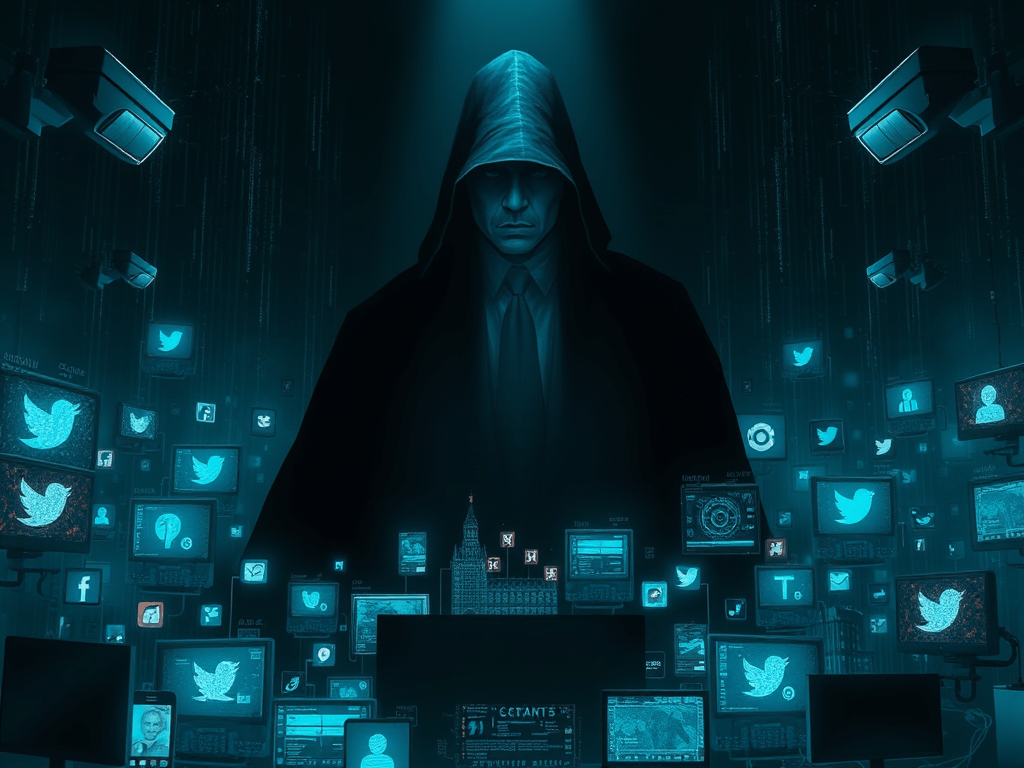
Some coverage also linked his remarks to concerns about antisemitism, suggesting he wants to “weaponize AI” for this purpose. These comments have drawn backlash, particularly from conservatives and free speech advocates on platforms like X and *gasp* even Reddit, who see Kramer’s comments as a less-than-subtle assault on Constitutional principles.
Ironically, Kramer’s remarks come amid heightened scrutiny of social media’s role in defining narratives pertaining to topics that legacy media outlets tends to either amplify or overlook entirely. So here’s why Kramer’s proposal is problematic —
The First Amendment explicitly prohibits Congress from making any law that abridges freedom of speech, press, assembly, or petition. Its foundational intent, as articulated in Supreme Court rulings like Brandenburg v. Ohio (1969), is to protect even unpopular, offensive, or false speech unless it incites lawless actions.
By promoting government control over expression, online or otherwise, Kramer is proposing a system where the state decides what is truthful, which directly undermines the “marketplace of ideas” concept from Abrams v. United States (1919) wherein truth is meant to emerge through open debate, not top-down censorship.

In essence his wording is bad faith, if not brazenly transparent, as it masks authoritarian impulses under the guise of safeguarding democracy. And that’s just the tip of the iceberg because Kramer’s call for ranking user authenticity and controlling speech also raises an alarm about exactly who gets to define “lies” or harmful content, which could target dissenting views, such as criticism of governments, corporations, or foreign policies, potentially including sentiments about Israel that could/would be labeled as “antisemitism.”
As a billionaire with direct connections to cybersecurity, which intersects within the murky waters of the surveillance and intelligence communities, his advocacy could be construed as self-serving, aiming to silence narratives he dislikes rather than neutrally addressing issues with AI.
History shows such systems devolve into tools for those in power: China’s social credit system is a perfect example. Once implemented, these restrictions rarely (if ever) stay limited, thus obstructing free expression — ostensibly the true objective — and discouraging people from speaking out for fear of being labeled as “inauthentic.”
Kramer is careful with his phrasing by qualifying it as a magnanimous warning about unchecked misinformation eroding public trust. While AI deepfakes and bots are real issues, the solution he suggested — government-mandated content control — would pose a much greater threat to the democratic values he supposedly wishes to “protect.”
The U.S. has addressed similar challenges (e.g., election interference) through transparency, fact-checking, and private platform moderation, not by eroding constitutional rights. Thus empowering the government to “take control” of social media echoes dystopian scenarios where speech is policed for ideological conformity, potentially stifling innovation, journalism, and activism.
As a foreign national with Stateside business interests, Kramer’s push for altering a foundational American right has fueled concern about external influences over American policy — the mere suspicion of which, I’m told, is tantamount to “antisemitism.”
This ties directly into ongoing disputes about tech billionaires shaping regulations to their advantage, especially in cybersecurity where firms like his profit from surveillance tools. If adopted, such limits could set a precedent for other nations to justify censorship, further weakening global free speech norms.
In short, while Kramer may harbor genuine apprehension about AI-amplified disinformation, his proposal risks far more harm by inviting government overreach into personal expression, thus increasing the tension between security and liberty where “protecting” free speech through restrictions could mean ending it.
For a deeper dive, check the CNBC clip or reactions on X because it’s a stark reminder of why the First Amendment exists: to shield speech from precisely this kind of intervention.
 New Hickory