Dana White, the architect behind UFC’s global domination, has thrown his weight behind a pseudo-combat event that’s become as polarizing as verbal sparring over politics at Thanksgiving dinner.
Launched in 2023, Power Slap is a competition where participants stand toe-to-toe, with hands behind their back, and trade open-handed haymakers to the face until someone either collapses or the judges decide a winner.
Power Slap is raw, and it’s a social media juggernaut. With over 22 million followers across platforms and videos racking up billions of views – some hitting 350 million on TikTok alone – it’s tailor-made for the short-attention-span era. White’s knack for spectacle shines here, turning 30-second slap clips into digital dynamite.
The promotion’s valuation, reportedly north of a half-billion dollars with standing offers to buy, shows it’s a financial slam dunk, drawing sponsors like Anheuser-Busch and Monster Energy. For fighters, it’s a shot at quick cash – up to $45,000 per event with bonuses – and a platform to build a personal brand, as seen with ex-UFC star Paige VanZant’s debut.
The Nevada State Athletic Commission’s sanctioning adds legitimacy, and White claims safety measures, like pre-fight medical screenings, keep risks in check. For enthusiasts craving raw intensity, Power Slap delivers a visceral thrill, no gloves needed.
Not surprisingly, however, Power Slap also has a dark side that’s difficult to ignore, for which medical experts are sounding the alarm louder than a ringside bell.
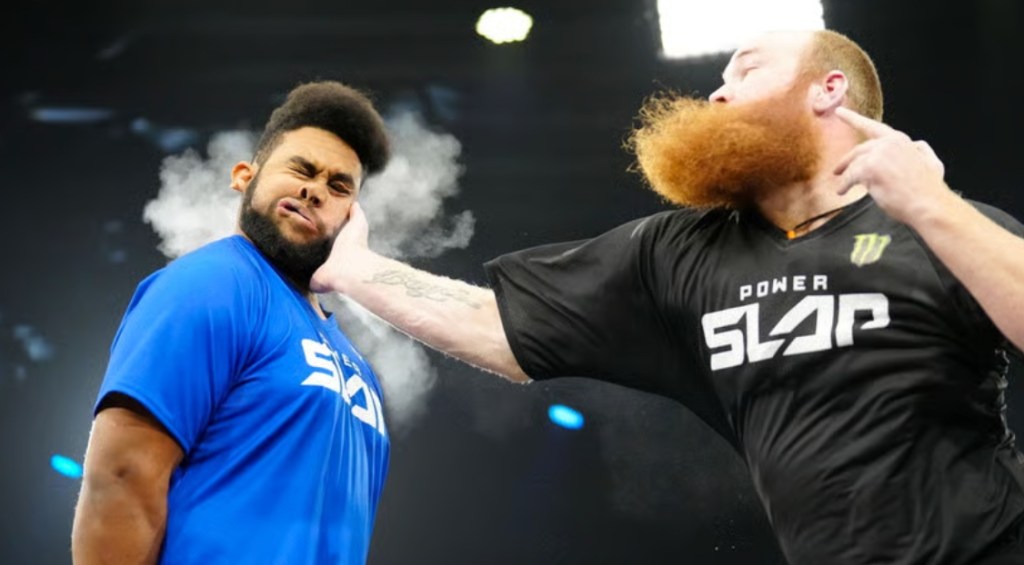
Last year a study found that 78.6% of participants showed evidence of concussion, with critics like Dr. Bennet Omalu warning of potential fatalities. The lack of defense – flinching is penalized – makes it a potential one-way ticket to CTE city, drawing censure from the likes of former UFC bantamweight champion Sean O’Malley and even Joe Rogan.
White himself initially considered becoming a professional boxer but had a change of heart after an experience with a punch-drunk former fighter brought him up close and personal with the kind of neurodegeneration for which, ironically, his contestants are now at considerable risk.
Pay is another sore spot. While Dana White touts big payouts, some fighters report as little as $2,000 to show, peanuts for brain-rattling punishment. The sport’s image took an additional hit when TBS dropped it after one season due to low ratings (220,000 viewers for the finale).
The reality TV series, “Power Slap: Road to the Title,” amps up the drama, but it feels more like a circus than a sport. Critics consider it exploitative, pointing to viral videos of homeless people slapped for cash as its grim predecessor. Yet this raw, unpolished edge is what hooks viewers – it’s the modern equivalent of a Roman gladiator bout, minus the lions but with plenty of wincing.
Admittedly there is something absurdly captivating about watching grown adults chalk up and slap each other into oblivion. It’s a guilty pleasure that thrives on shock value, echoing the UFC’s early “human cockfighting” days, minus the strategy or skill. I’d be lying if I said that I wasn’t amused on occasion by the whole damn spectacle despite my own personal objections.
Power Slap is a high stakes gamble that’s paying off financially but risks long-term backlash. It’s a viral sensation with a flair for eliciting curiosity, but its health risks and ethical issues could knock it out cold.
Love it or hate it, White has created a spectacle that’s as lowbrow as it is unforgettable – a slap heard ‘round the world, for better or worse.
Photo c/o Getty Images via The Economist; February 1, 2024
 New Hickory